

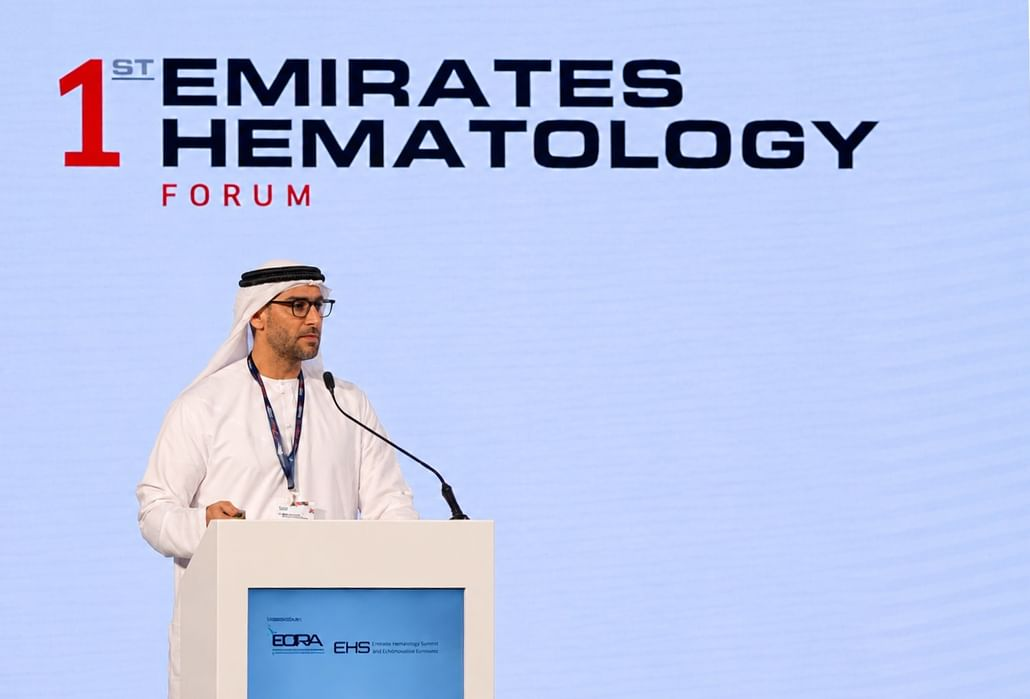
The first Emirates Hematology Forum opened on Saturday at Rosewood Abu Dhabi, bringing together specialists from across the UAE and leading international experts to discuss the latest developments in the diagnosis and treatment of blood disorders, including advances in immunotherapies, targeted treatments and emerging cellular therapies.
The programme will explore emerging treatment strategies for multiple myeloma, including immunotherapies and antibody-drug conjugates (ADCs), as well as approaches to sequencing treatments according to patients’ conditions and responses.
Sessions will also address advances in lymphoma and leukaemia management, the potential for chemotherapy-free treatment in selected cases, and strategies for patients whose disease does not respond to treatment or relapses following therapy.
Further discussions will cover myeloid diseases, including acute myeloid leukaemia (AML), myelodysplastic syndromes (MDS) and chronic myeloid leukaemia (CML), as well as stem cell transplantation, Hodgkin lymphoma and complications associated with newer therapies, including bleeding and thrombosis.
In statements to the Emirates News Agency, Emirati physician-scientist Dr Ajlan Al Zaki, Consultant Physician in the Hematology & Blood Cancer Department at Cleveland Clinic Abu Dhabi and Chair of the Forum, said that advances in cancer treatment are driving a rapid shift towards immunotherapies, which have become part of standard care for patients with haematological malignancies.
He highlighted advances in gene therapies for non-malignant blood disorders, particularly sickle cell disease and thalassaemia, involving the modification of patients’ stem cells to help restore the production of functional haemoglobin.
He also pointed to developments in cancer vaccines, including therapeutic vaccines designed to strengthen immune responses in patients with tumours and vaccines aimed at potentially preventing cancer. Advances in disease detection and monitoring include highly sensitive tests for measurable residual disease (MRD) and circulating tumour DNA (ctDNA) analysis, which can help detect disease earlier, identify patients at greater risk of relapse and guide timely treatment decisions before clinical symptoms appear.